Trade-offs in technology architecture: the delivery decision behind every technical decision
There is a gap between the moment a technical team identifies the ideal architecture and the moment that architecture can actually be executed. That gap does not appear in the diagrams. It is not in the commercial proposal. And it is almost never discussed at kick-off.
But that is exactly where it is decided whether a technology project will work or not. The real question in production is not what is the technically correct solution? The real question is: what is the solution we can execute without compromising what is already working?

What was not in the design
On complex technology projects, competent technical teams identify the ideal architecture relatively quickly. The problem shows up afterwards, at execution, when operational reality meets the design. This is the point where most technology projects in Colombia and Latin America hit their first real friction with the operation.
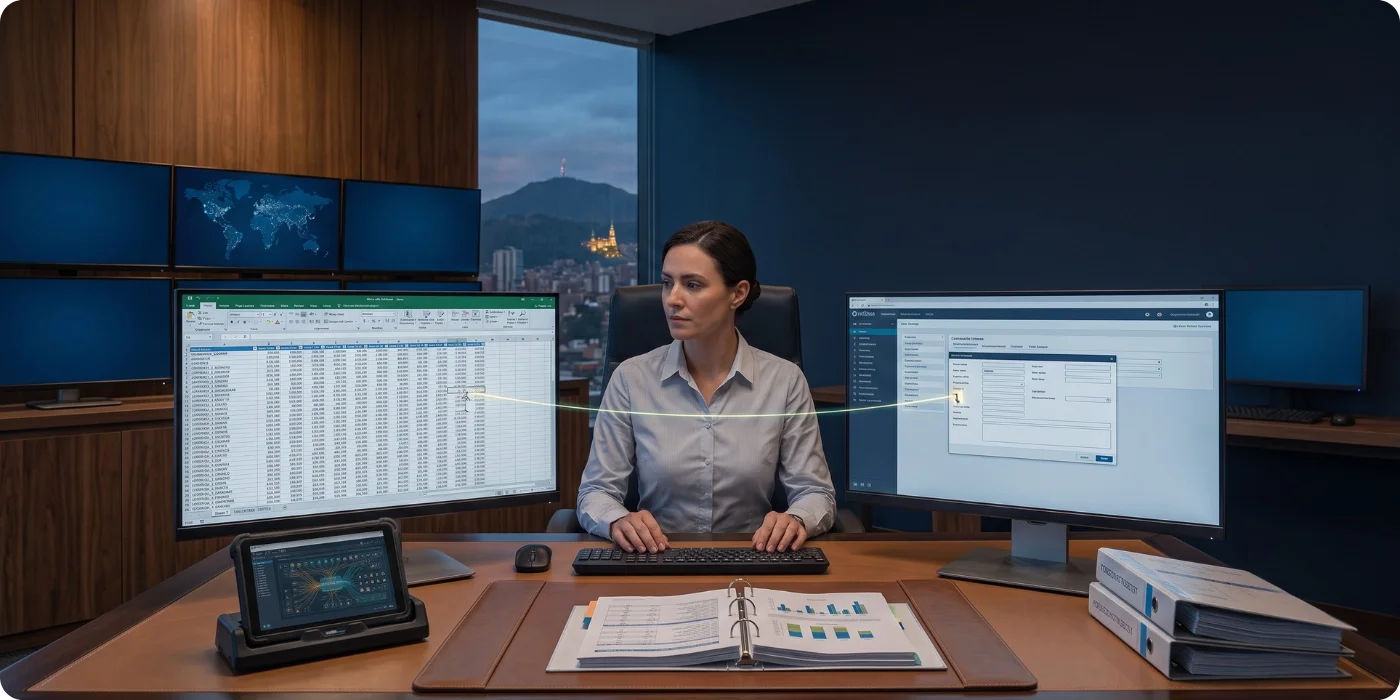
There are live integrations that cannot be interrupted. There are business processes running on the very systems being modified. There are parts of the architecture that cannot be stopped without consequences reaching far beyond the project. And there are operational teams that have to keep working while all of this changes around them.
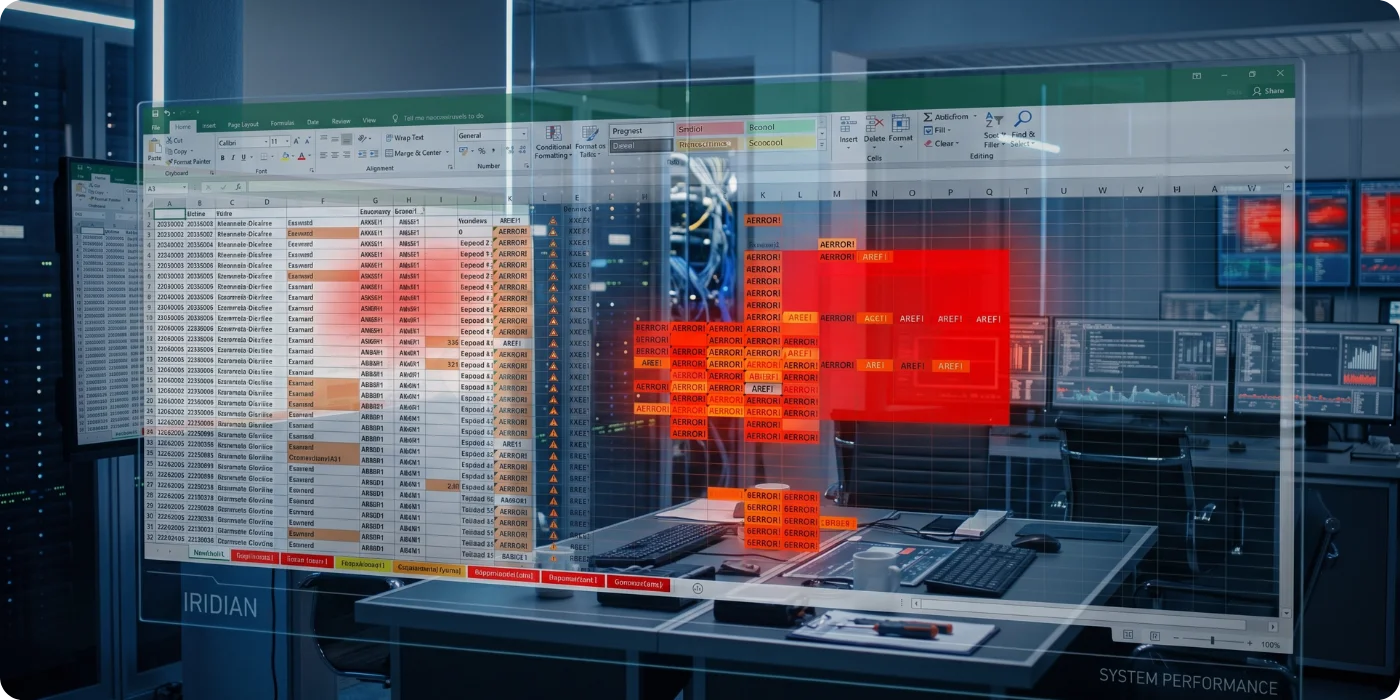
At that moment, delivery stops being task coordination and becomes real risk management. Not the abstract risk of a risk register updated in a spreadsheet every two weeks. The concrete risk that a technical decision taken today causes an operational failure tomorrow, in a system the organization cannot afford to have fail.

The hard decision was not a technical one
On this kind of project, the hardest decision is rarely architectural. Technical teams know what the right solution is. The hard decision is a different one: whether to move faster and take on operational risk, or to design a slower path that preserves the stability of what already exists.
That decision has a visible cost and an invisible one. The visible cost is time: a conservative path takes longer, consumes more effort in validation, and creates the discomfort of not being able to show progress as fast as everyone would like. The invisible cost appears when the fast path is chosen without properly measuring the risk: a production failure, a broken integration, an operation halted at the worst possible moment.
Sacrificing speed is not a sign that something went wrong on a project. On systems in production, it is often the only responsible decision. The problem is that the decision has to be made with real information about the state of the operation, not with the natural optimism that characterizes the early phases of any project.

What changes when you understand delivery as risk management
A Delivery Manager who understands the job as task coordination reads a project plan one way. One who understands it as managing the operational consequences of technical decisions reads it in a completely different way.
The first sees a schedule with milestones, dependencies, and dates. The second sees decision points where the project can take paths with very different risk profiles, and their job is to make sure the right people have the right information to make those decisions before the operation makes them for them.
This difference is not semantic. It shows up in how progress meetings are structured, what information is escalated to leadership and when, how implementation windows are designed to minimize operational impact, and what criteria are used to decide whether a change is ready for production.
On projects where critical systems cannot be stopped, delivery management is not a support role for the technical team. It is the function that preserves control of the operation while the system evolves. And that requires reading two realities at once that are frequently managed separately: the state of the project and the state of the operation.

The metric that actually matters
When the frame of reference shifts from delivery speed to operational continuity, the way a project's success is measured shifts too.
A project that delivered every feature on the committed timeline but caused three operational outages along the way was not successful. A project that took longer than planned because it chose conservative paths that preserved the stability of the operation throughout was successful, even if the schedule numbers in the final presentation are not perfect.
Stated like this, the distinction seems obvious. But in practice, organizational incentives frequently point the other way: visible speed is rewarded, and operational outages are under-recorded as "process incidents", never connected to the delivery decisions that caused them.
Changing that logic requires the people leading complex technology projects to be clear about one thing: their job does not end when the system is deployed. It ends when the operation demonstrates that it can sustain itself reliably with the new system in production. Everything before that is preparation.
The trade-off nobody names in the proposal
Every technology project on systems already in production involves a trade-off between speed and stability that is rarely named explicitly at proposal stage. There is talk of schedules, of deliverables, of methodology. But the underlying question — how fast can we move without compromising what is already working? — frequently stays implicit, assumed differently by each party.
When that conversation does not happen explicitly at the start, it happens anyway later, but under pressure and with fewer options available. The moment a technical team discovers in production that the path they chose was not compatible with the real operation is not the ideal moment to have that conversation.
At Iridian, this trade-off is part of the conversations we have from the start of any project involving critical systems. Not because it is a comfortable conversation, but because it is the conversation that determines whether the project will actually be executable, or merely well designed.