Integrating critical systems in production: a real case in consumer goods
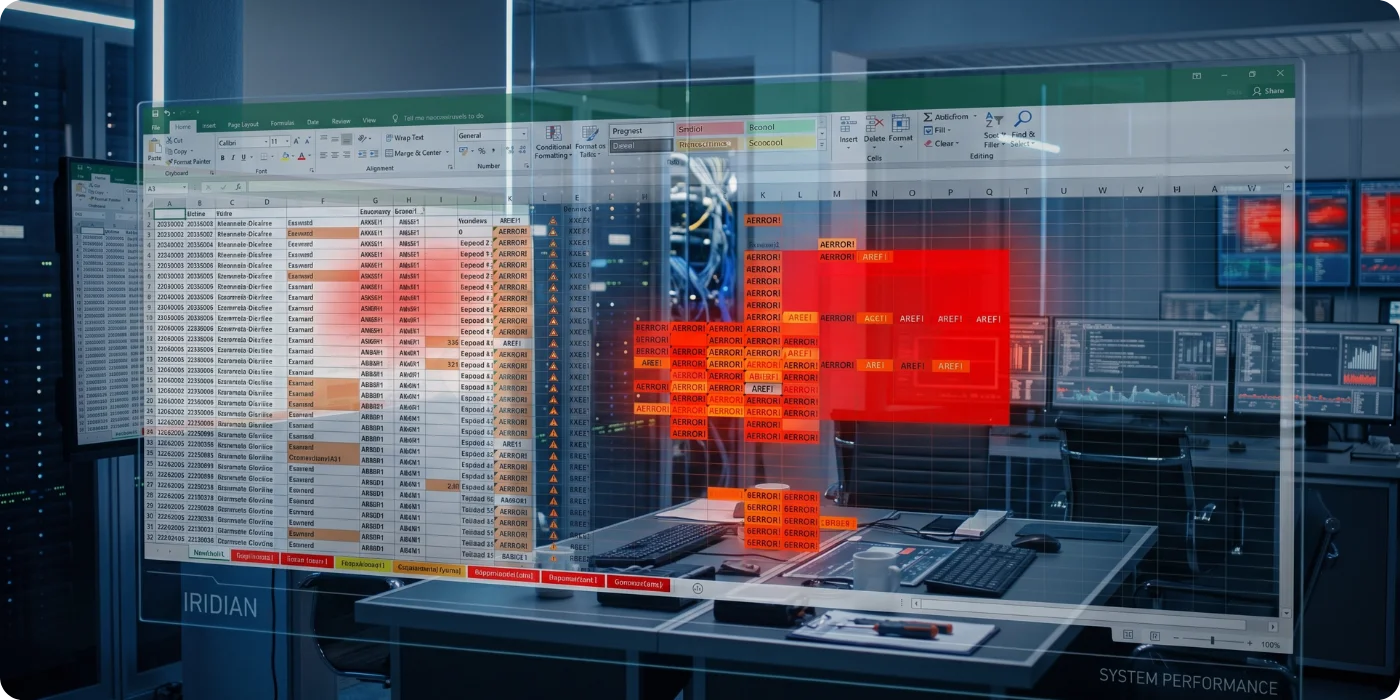
There is a kind of operational risk that is especially hard to detect in complex organizations: the kind that never causes an immediate crisis. It triggers no alarms, appears in no incident report, and draws no attention in the boardroom. It simply exists, day after day, as part of the normal way of operating.
That was exactly the problem facing one of the largest breweries in South America when it came to Iridian.
The problem nobody was seeing
Every day, someone on the team moved data by hand between two systems that were critical to the company. It was not an exception or a temporary workaround. It was the established process. The way things worked. A pattern that, in our experience with integration projects in Colombia and Latin America, repeats far more often than organizations admit.
And that is precisely where the danger lies: manual processes that work are the hardest ones to eliminate, because they never generate enough urgency to justify a change. There is no crisis. There is no visible cost. There is just a person doing a repetitive task that, taken in isolation, looks harmless.
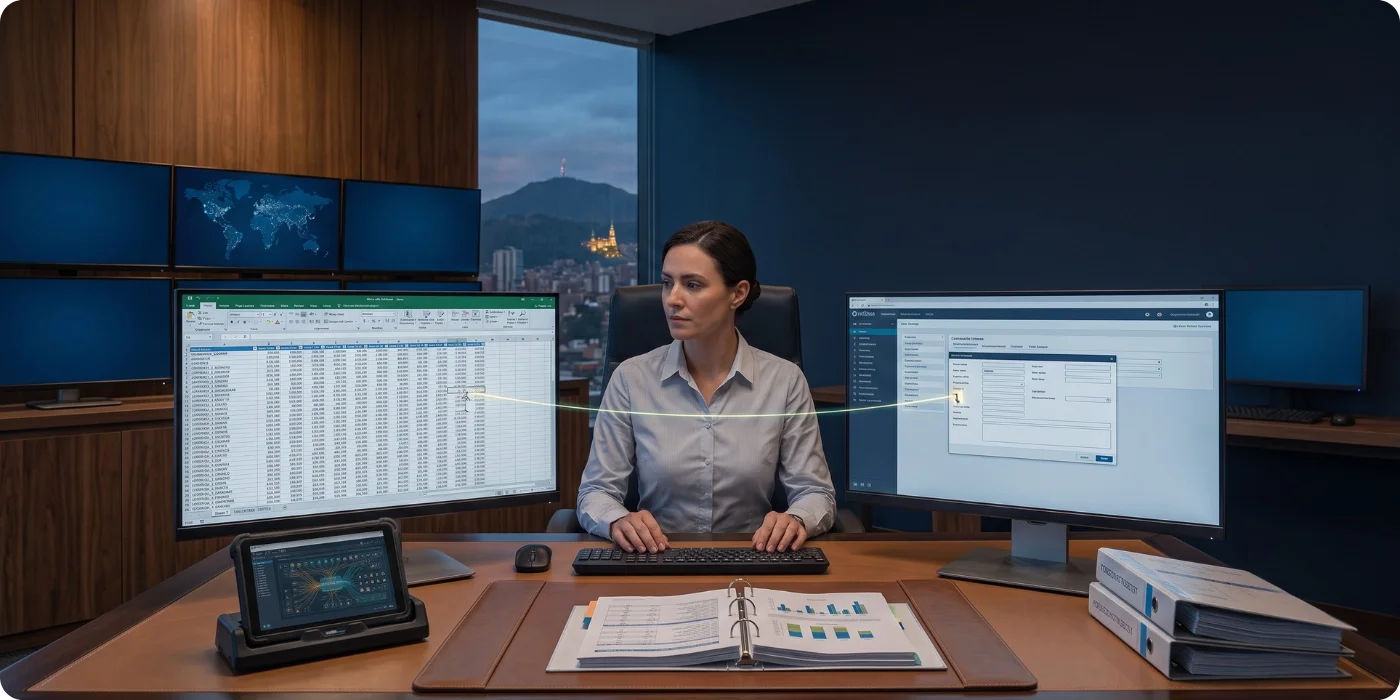
But seen from a systems perspective, it tells a different story.
When two systems that are critical to the business were never designed to work together, the organization ends up closing that gap with human intervention. And that human intervention, however careful and reliable, introduces three risks that accumulate quietly over time: the risk of error in the data transfer, the risk of interruption when the responsible person is unavailable, and the risk of scale when data volume grows and the manual process can no longer keep up.
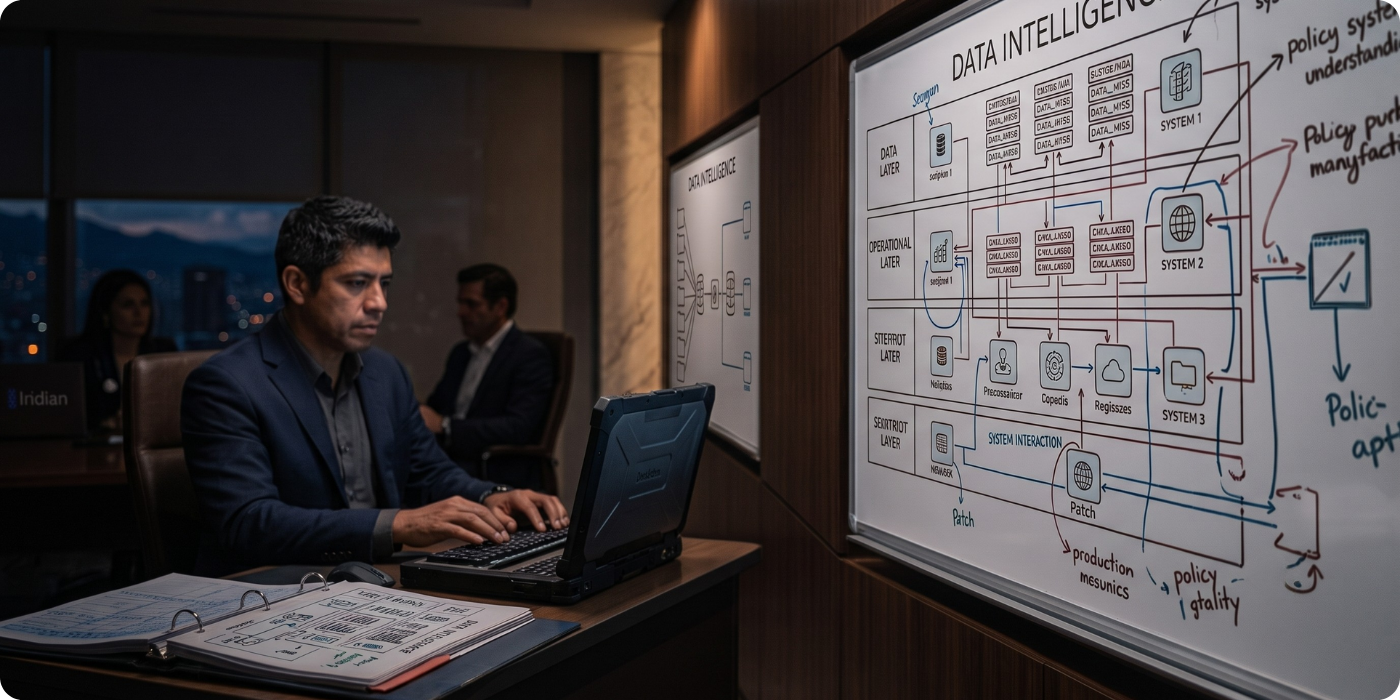
The real problem was not the person moving the data. It was that two critical systems were never designed to work together, and that design gap had been papered over for years with manual work.
What Iridian built
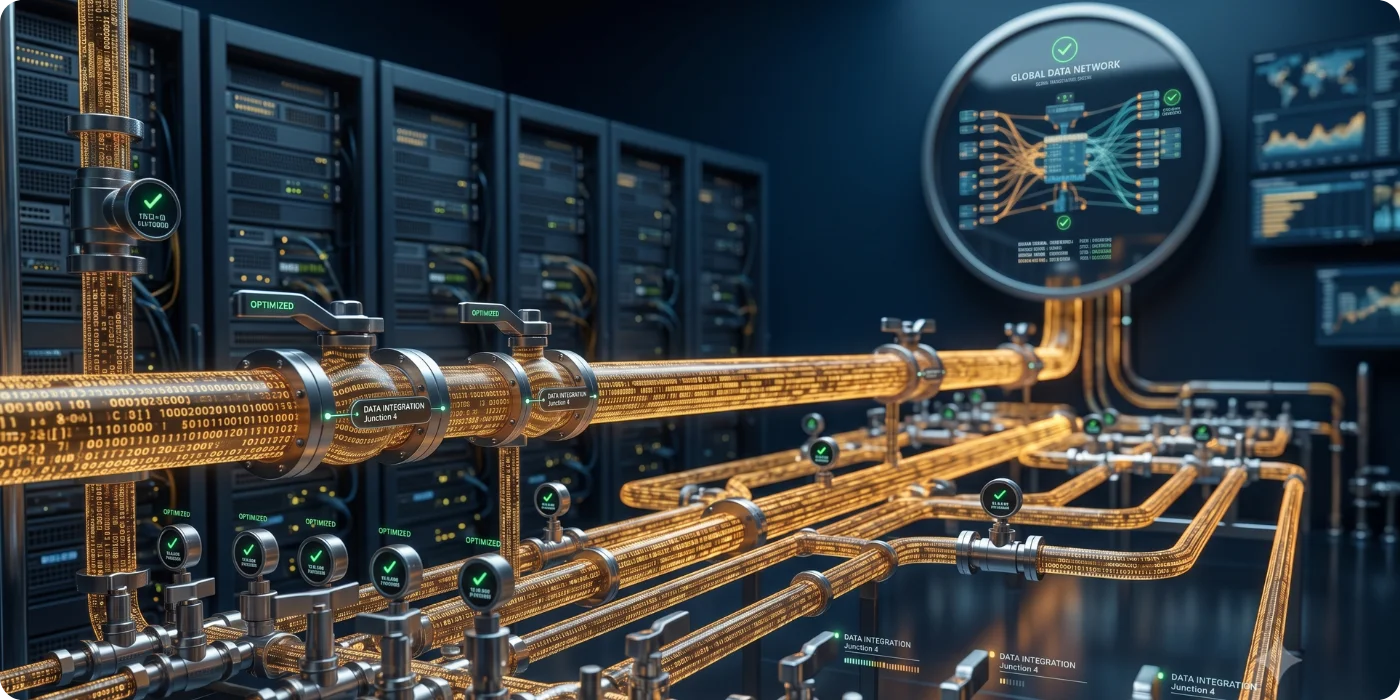
The approach was not to replace the existing systems, nor to change how the teams worked. It was to remove the human dependency that connected them.
Iridian built an integration so that billing information flowed automatically between both systems: with no human intervention, in a scalable way, and with full traceability over every data transfer.
Three principles guided the design from the start:
1. Automation without operational friction:
The integration had to work within the existing architecture, not around it. Replacing the underlying systems of an operation at this scale was neither viable nor necessary. What was needed was an integration layer that made transparent to the operation what previously demanded constant manual attention.
2. Real scalability, not theoretical:
An integration that works at today's volume but needs intervention as volume grows does not solve the underlying problem. The design assumed the company's operational growth from the outset, not just its immediate needs.
3. Full traceability:
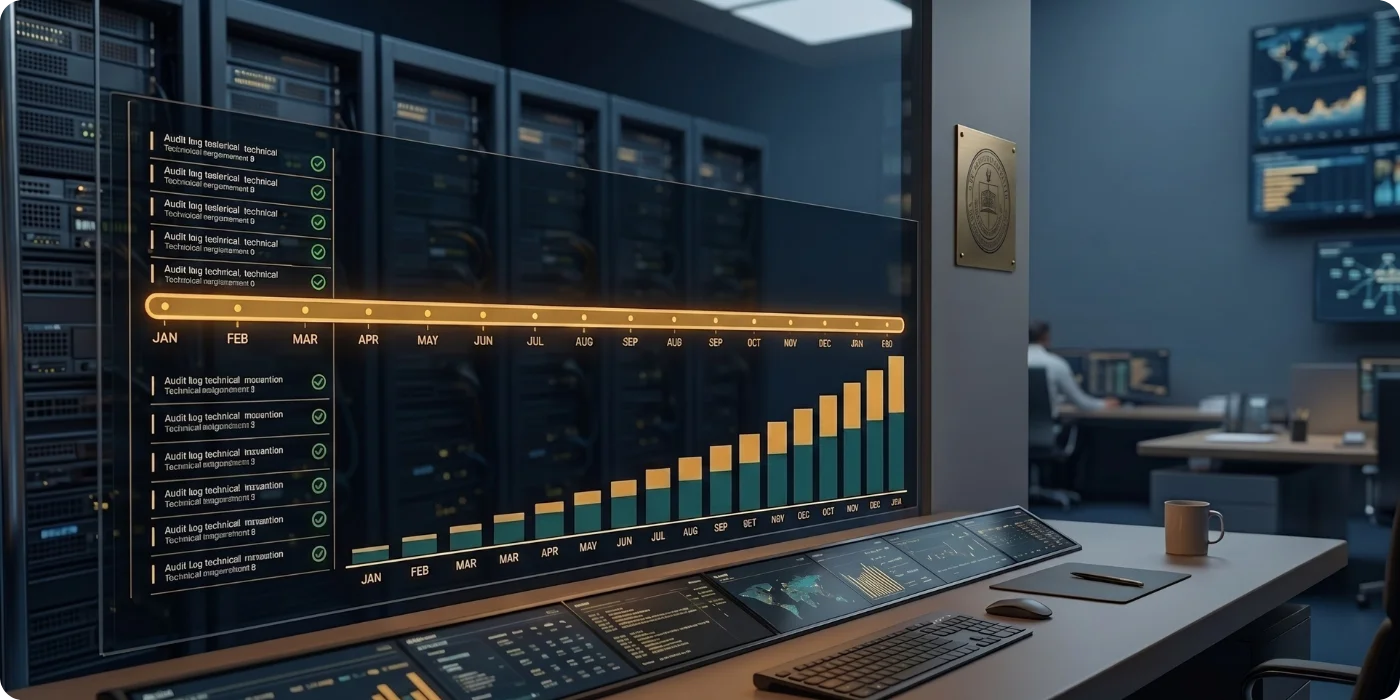
In a billing operation at this scale, knowing what data was transferred, when, and in what state is not an optional technical detail. It is an audit and operational governance requirement. Every movement of data was logged, verifiable, and auditable.
The result
Simple but decisive: the manual operation disappeared. The risk of error associated with transferring data by hand was eliminated. And the team that used to spend time on that task was freed up for work that genuinely requires human judgement.
But beyond the immediate operational efficiency, the underlying change was structural: two critical systems that had never been designed to work together started doing so automatically, reliably, and sustainably over time.
That kind of result does not show up on a productivity dashboard on launch day. It shows up weeks and months later, when the operation keeps running without anyone having to step in, when volume grows and the process scales without friction, and when an audit can reconstruct the full transfer history without depending on anyone's memory.
Why this case matters beyond the industry
The challenge this brewery faced is not unique to consumer goods. It is one of the most common patterns in organizations that have grown fast and closed the gaps between their systems with manual processes that, over time, became invisible simply because they worked.
Any operation with critical systems that do not talk to each other automatically has a version of this problem. Sometimes it is billing. Sometimes inventory. Sometimes customer information travelling by email between two platforms. The shape changes, but the structural risk is the same: a human dependency at a critical point of the operation that nobody is looking at because it has not caused a crisis yet.
The relevant question is not whether that risk exists in your organization. The question is how long you have been operating with it.
If your operation still has critical processes that depend on manual intervention, let's talk about how to reduce that risk and build an operation that is more reliable, more scalable, and easier to manage.