

Who we are
Iridian is a Technology Solutions Partner with more than 15 years of experience designing, building, and operating mission-critical technology systems in production across multiple industries.
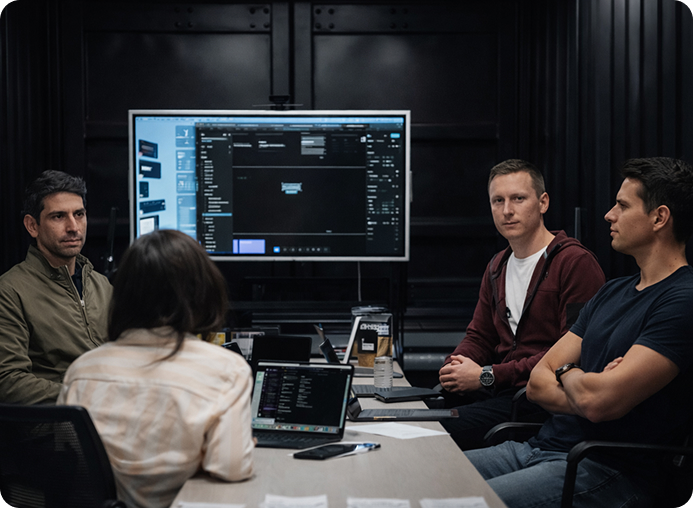
We support organizations where technology is not a support function or a secondary enabler, but a central operating infrastructure that sustains key processes, high-impact decisions, and large-scale operations.
We integrate as a long-term partner,, assuming real responsibility for the systems we design, deploy, and operate over time.
Our work is centered on systems that:
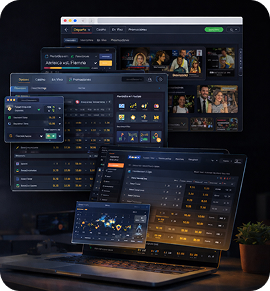
Support day-to-day business operations

Must meet demanding requirements for availability, control, and traceability
Operate in complex, regulated, or multi-country environments
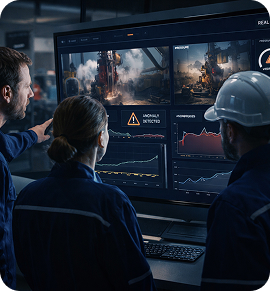
Cannot fail without generating operational, financial, or reputational impact
What we believe:
Technology must solve real operational problems, not create new layers of complexity
Systems must be scalable, reliable, and governable from day one and over time
Long-term value comes from disciplined execution, not fast implementations without ongoing responsibility
Architecture is a business decision, not only a technical one
Operating well is as important as building well
We do not chase
trends.
We do not sell
tools.
We design and operate systems that work, scale, and endure in production.
Perspectives and insights
Reflections from designing and operating technology systems in production, in contexts where operations, risk, and business continuity are critical.
Growth does not scale without systems
- Growth does not fail because of lack of execution. It fails because it is disconnected from operations.
- Without systems that integrate data, automation, and end-to-end decision-making, growth becomes expensive, fragile, and difficult to govern.
- Sustainable growth is not managed as a tactical function.
It is designed as a business operating system.
Why many “agile” projects fail in production
- Misunderstood agility optimizes delivery while neglecting operations. Systems that work in demo collapse when exposed to real-world volume, regulation, and exceptions.
- Technology maturity is not measured by delivery speed, but by the ability to operate well over time.
When automation fails, the problem is not the technology
- Automation does not fix broken processes.
It amplifies them.
- The most expensive failures are not technical, but structural: hidden dependencies, unmodeled exceptions, and inconsistent data.
- Effective automation starts by redesigning the full operating system, not just the isolated flow.

Data governance as operating infrastructure
- Data only creates value when it is trusted, accessible, and actionable. Without governance, information becomes noise and risk.
- Treating data as operating infrastructure – not as a byproduct – is a necessary condition for consistent and scalable decisions.
Architecture comes before tools
- Tools do not scale operations. Architecture does.
- Without a clear view of how processes, data, and systems interact, technology stacks become islands that are difficult to govern.
- Architecture is a business decision, not a technical preference.
Global Delivery
Global presence and operating model
Iridian operates under a distributed global delivery model designed to support regional and multi-country operations without fragmenting governance or execution.
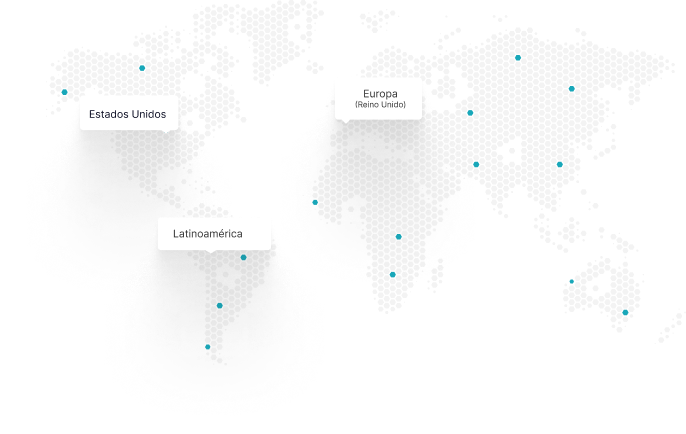
This model allows us to:

Support critical operations across markets with continuity and stability
Maintain unified standards of architecture, security, and governance
Operate and evolve systems in production without depending on isolated individuals
Adapt to regulatory, operational, and cultural contexts without losing control
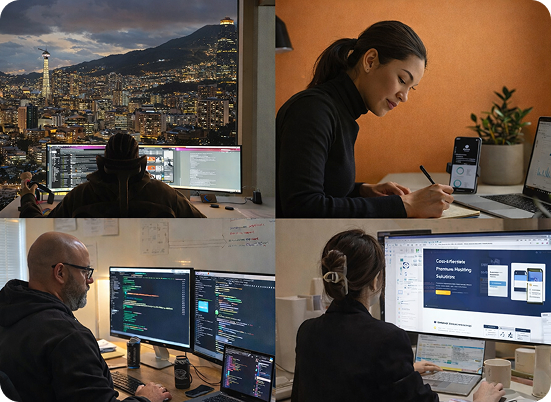
Our focus is not the size of the team or geographic expansion as an end in itself.
How we integrate
Understanding operations and risk before designing technology
Assuming ongoing responsibility for stability, performance, and evolution
Working with clear governance, defined roles, and focus on real outcomes
Designing systems intended for production, not for demos
Operating, optimizing, and adapting systems as the business changes
Understanding operations and risk before designing technology
Designing systems intended for production, not for demos
Assuming ongoing responsibility for stability, performance, and evolution
Operating, optimizing, and adapting systems as the business changes
Working with clear governance, defined roles, and focus on real outcomes